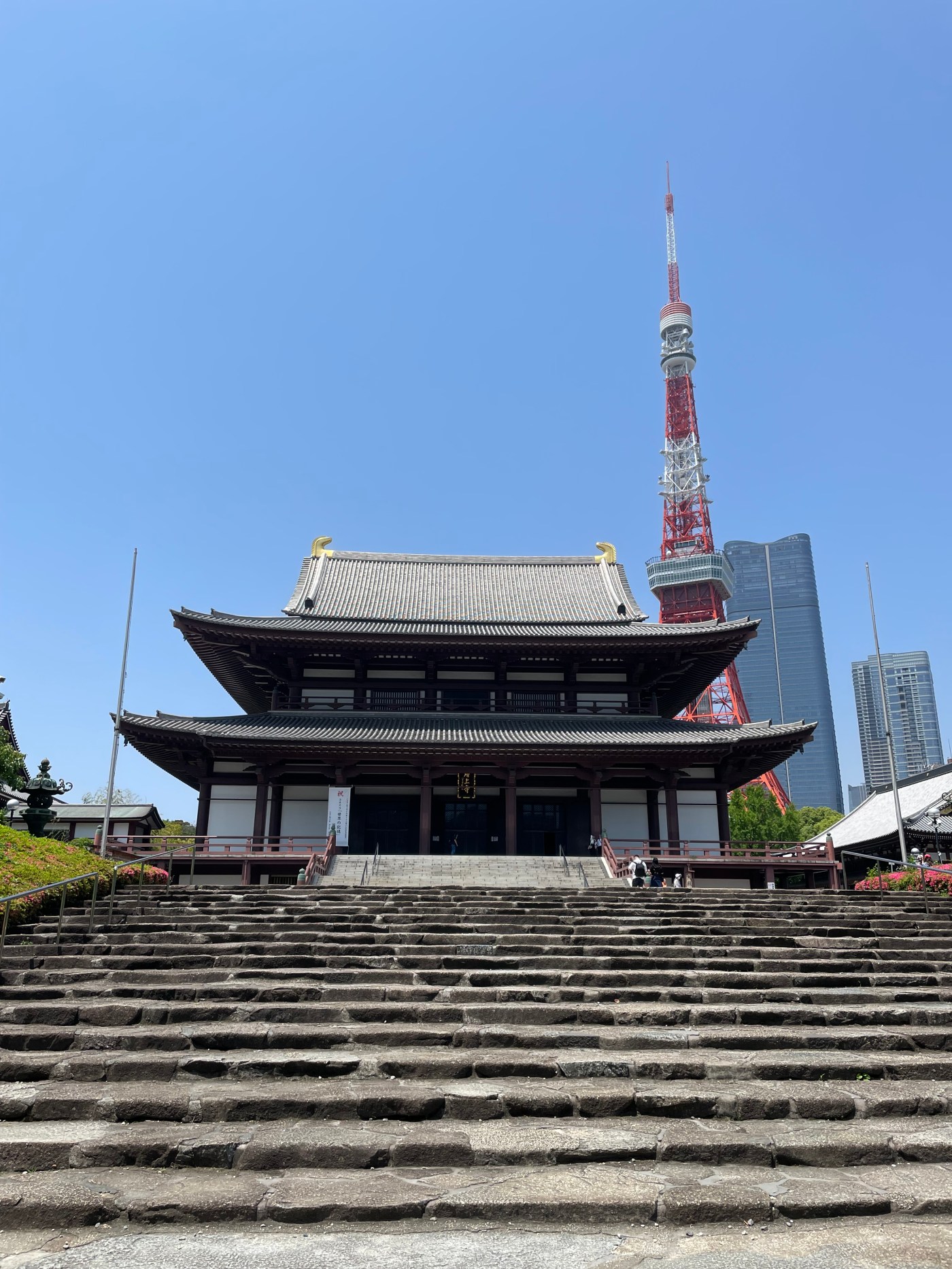
Per questo primo mese, il nostro appartamento temporaneo si trova a pochi passi dalla Tokyo Tower. Spesso ci concediamo una passeggiata nei dintorni, e poco alla volta stiamo scoprendo quanto questa zona sia ricca di storia, natura e nuove architetture. Ecco cinque luoghi da visitare a piedi, tutti raggiungibili in pochi minuti.
For this first month, our temporary apartment is just a short walk from Tokyo Tower. We often take walks around the neighborhood, and little by little we’re discovering how rich this area is in history, nature, and modern architecture.
Here are five places worth visiting on foot, all within a few minutes’ walk.
1. Tokyo Tower
Alta 333 metri, la Tokyo Tower è uno dei simboli più riconoscibili della città. Costruita nel 1958, la torre offre due piattaforme panoramiche: il Main Deck a 150 metri e il Top Deck a 250 metri, da cui si può ammirare un panorama a 360° su Tokyo e, nelle giornate limpide, anche il Monte Fuji. Alla base della torre si trova il complesso FootTown, con ristoranti, negozi e attrazioni per famiglie.
Durante la Golden Week (a inizio Maggio), la base della Tokyo Tower è decorata con 333 鯉のぼり koinobori, bandiere a forma di carpa. Simboleggiano la longevità e sono di augurio per la Festa dei bambini, che cade il 5 maggio. Il numero 333 omaggia l’altezza della Tokyo Tower.
Standing 333 meters tall, Tokyo Tower is one of the city’s most iconic landmarks. Built in 1958, it offers two observation decks: the Main Deck at 150 meters and the Top Deck at 250 meters, both providing a 360-degree view over Tokyo, and, on clear days, even Mount Fuji.
At the base of the tower is the FootTown complex, which houses restaurants, shops, and family-friendly attractions.
During Golden Week (in early May), the base of Tokyo Tower is decorated with 333 鯉のぼり koinobori carp-shaped streamers that symbolize longevity and are flown to celebrate Children’s Day on May 5. The number 333 is a nod to the tower’s height.

2. Shiba Park
Proprio accanto alla torre si estende lo Shiba Park, uno dei più antichi parchi pubblici del Giappone, istituito nel 1873. Il parco offre ampi spazi verdi, sentieri alberati e viste spettacolari della Tokyo Tower. In primavera, è possibile ammirare la fioritura di oltre 200 ciliegi, mentre in autunno il “Maple Valley” si tinge di colori caldi.
È un’ottima location per picnic, o semplicemente per ammirare i fiori e le aiuole curatissime.
Right next to the tower lies Shiba Park, one of Japan’s oldest public parks, established in 1873. The park offers wide green spaces, tree-lined paths, and spectacular views of Tokyo Tower. In spring, you can enjoy the blooming of over 200 cherry trees, while in autumn the “Maple Valley” turns warm shades of red and gold.
It’s a great spot for a picnic, or simply to admire the flowers and the beautifully maintained gardens.

3. Tempio Zojoji
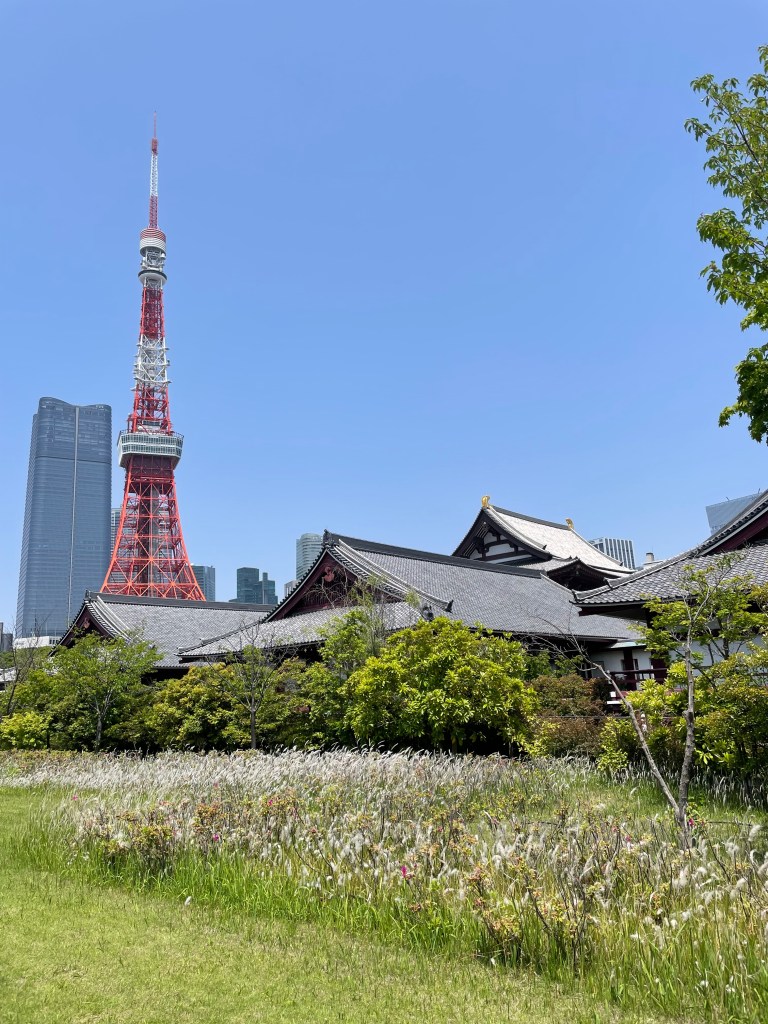
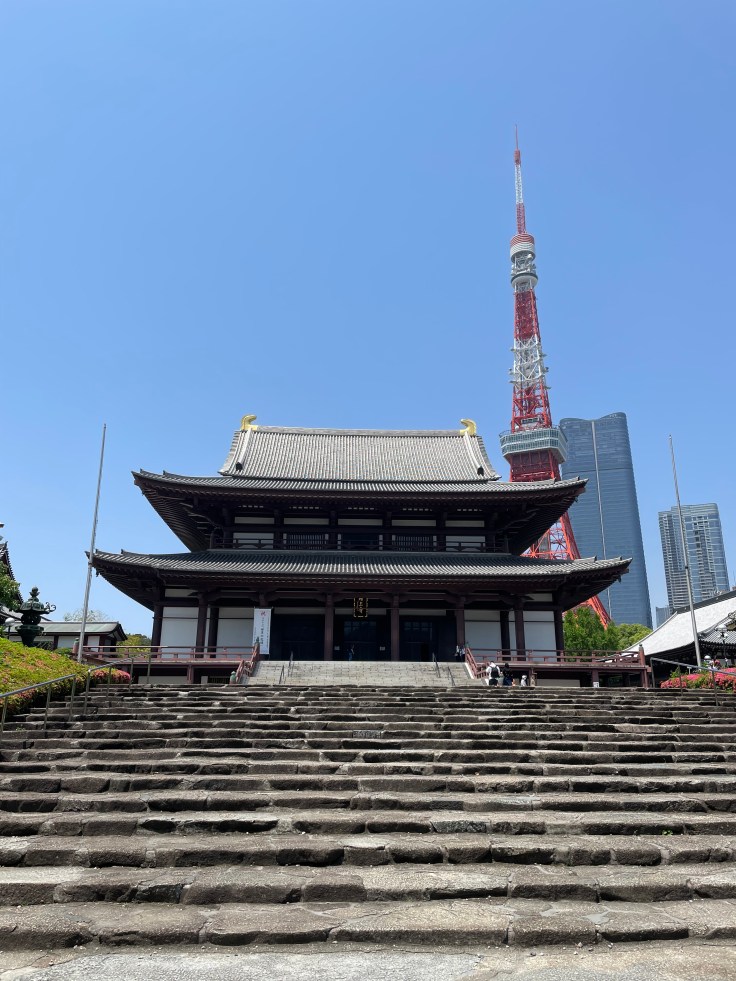
Adiacente allo Shiba Park si trova il tempio buddista Zojoji, fondato nel 1393 e storicamente legato al clan Tokugawa. Il tempio ospita le tombe di sei shogun Tokugawa e il suo portale principale, il Sangedatsumon, costruito nel 1622, è l’edificio in legno più antico di Tokyo. Il contrasto tra l’architettura tradizionale del tempio e la moderna Tokyo Tower sullo sfondo crea uno scenario unico e suggestivo.
Adjacent to Shiba Park is Zojoji, a Buddhist temple founded in 1393 and historically linked to the Tokugawa clan. The temple houses the tombs of six Tokugawa shoguns, and its main gate, the Sangedatsumon, built in 1622, is the oldest wooden structure in Tokyo.
The contrast between the temple’s traditional architecture and the modern Tokyo Tower rising in the background creates a unique and striking scene.
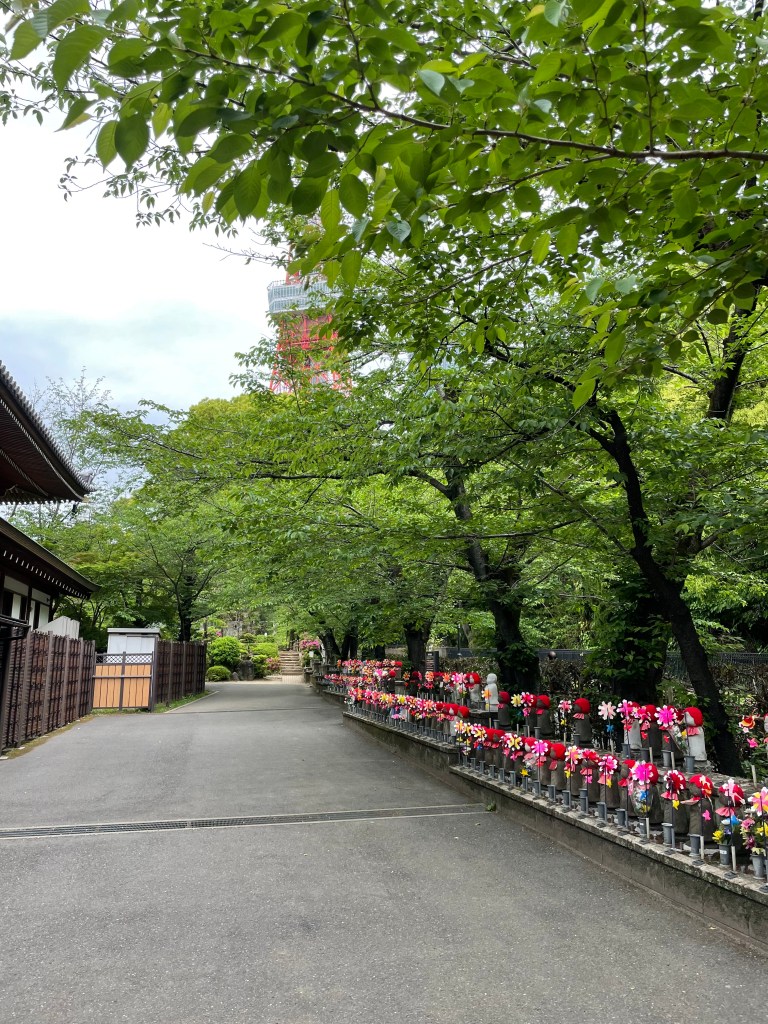
All’interno del giardino del tempio si trovano tantissime piccole statue di pietra dedicate ai bambini che non sono mai nati o sono nati morti.
Inside the temple garden, you’ll find many small stone statues dedicated to children who were never born or were stillborn.
4. Azabudai Hills
A breve distanza si trova Azabudai Hills, un moderno complesso inaugurato nel 2023 che combina spazi verdi, negozi, ristoranti, gallerie d’arte e uffici. Conosciuto come le “Colline del Futuro”, il progetto mira a creare un’armonia tra innovazione, benessere e ambiente. Tra le attrazioni principali ci sono il museo digitale teamLab Borderless e la Shueisha Manga Art Heritage Gallery, che espone opere d’arte legate a famosi manga giapponesi.
Ad Azabudai abbiamo trascorso molto tempo in questo mese, specialmente da Starbucks nel quale ci piace sederci per qualche ora e studiare/leggere in un’atmosfera diversa da quella di casa.
A short walk away is Azabudai Hills, a modern complex opened in 2023 that blends green spaces, shops, restaurants, art galleries, and office buildings. Known as the “Hills of the Future,” the project aims to create harmony between innovation, wellness, and the environment.
Among the main attractions are the teamLab Borderless digital art museum and the Shueisha Manga Art Heritage Gallery, which features artwork related to iconic Japanese manga.
We’ve spent a lot of time at Azabudai this month, especially at the Starbucks, where we enjoy sitting for a few hours to study or read in a setting that feels a little different from home.


5. Azabu-Juban
Infine, una passeggiata nel quartiere di Azabu-Juban offre un’esperienza autentica della vita locale. Questa zona è famosa per le sue strade acciottolate, le botteghe tradizionali, i caffè accoglienti e una varietà di ristoranti che servono cucina giapponese e internazionale. Azabu-Juban è anche noto per il suo festival estivo, che attira visitatori da tutta la città con bancarelle di cibo, musica e danze tradizionali.
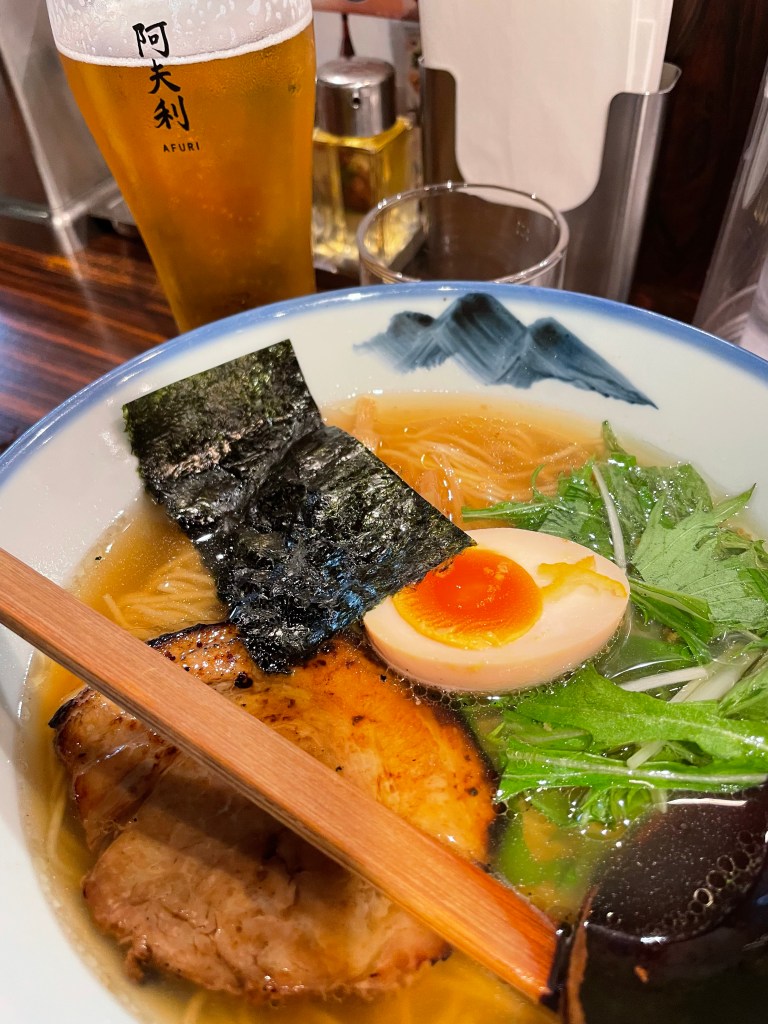
Sicuramente consigliamo il ristorante di ramen Afuri, che rientra nel “ramen costosi” ma particolari che ci sono a Tokyo. Quello nella foto è un ramen allo yuzu, un agrume molto delicato simile al limone.
Lastly, a walk through the Azabu-Juban neighborhood offers an authentic glimpse into local life. This area is known for its cobblestone streets, traditional shops, cozy cafés, and a variety of restaurants serving both Japanese and international cuisine.
Azabu-Juban is also famous for its summer festival, which draws visitors from all over the city with food stalls, music, and traditional dancing.
We definitely recommend the ramen restaurant Afuri, which falls into the category of Tokyo’s more “premium” but unique ramen spots. The one in the photo is yuzu ramen, made with a delicate citrus similar to lemon. Light, fragrant, and very refreshing.


 Not the usual tourists
Lascia un commento